Showing posts with label SAMUEL. Show all posts

Saturday, January 26, 2019

If Only I Could Ask Her… But Which Grandmother to Ask??

Who Owned the China?

When my father passed away in the summer of 2008, he left a list directing who should receive what. I use the word "list" instead of "will" because I truly don't know for sure he had an actual will. There weren't a lot of family heirlooms other than photographs to mark the lives of his parents and grandparents - his mother's lamp, a chair, some china... are a few of the items I recall.

Along with some items that belonged to my father, I received a pair of gold plates and a partial tea set which, reportedly, belonged to my great-grandmother. On Dad’s list, he denoted that the items belonged to his grandmother. No name. That’s a problem. Which grandmother?? Henrietta Ostermann, his father’s mother? Or was it his beloved maternal grandmother, Estelle Byk? I have no idea.
The "partial" tea set
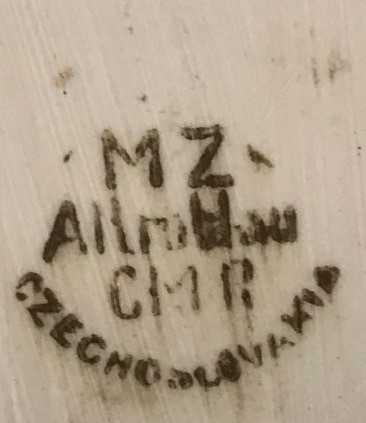
Porcelain Maker's mark
on back of tray


Beautifully gilded plate
Porcelain Maker's mark
on back of plate


As I am trying to record the provenance of “Our Stuff”, it would be helpful to know. My opportunity to speak with either of my paternal great-grandmothers is long-gone. Henrietta passed away in 1956 and Estelle in 1948. How could I determine who had owned the pieces which now sit on my dining room buffet?
Since all the items were produced in Europe maybe I could determine which grandmother’s family might have brought them to America.
The tea set (with its chipped spout and without the sugar bowl) was made by the Stara Role (Altrohlau) pottery works, originally established in 1810 by Benedict Haßlacher in the areas of Prague, Vienna, and Pest.[1] The china mark on the bottom of tray places the time of manufacture somewhere between 1909 -1922. By then, the firm had been bought by C.M. Hutschenreuther and since then the MZ Altrolau mark was used.
Barnett "Barney" SAMUEL
1882-1953
Henrietta OSTERMANN
1883-1956


Henrietta, also known as “Hattie” was born in Brooklyn, New York in 1883. Hattie’s husband, Barnett Samuel was born in Jamaica, New York in 1882. His family has been in the United States since 1859. (By the way, it’s Barney’s fault I even do genealogy! Dad told me he was “Barney the Red,” born in Ireland. Looooooong story, short answer: NOPE!)
So, clearly, that family didn’t bring the tea set to America from Europe. Hattie and Barney married in 1904 – too early to have received the tea set as a wedding gift.
Harry George KESNER
1875-1950
Estelle BYK
1885- 1948


How about Estelle and her husband, Harry George Kesner? Both Brooklyn born; Harry in 1875 or 1879 and Estelle in 1885. They married in 1906. Again, this family couldn’t have brought the set from Europe since it was made after 1909. Their 1906 marriage was too early to have received the tea set as a wedding gift.
So – that was a bust. Maybe someone went on a trip and brought the set back? Or it was a gift? Or whoever owned it purchased it at a shop? Maybe I will never know. But at least we know it was either Hattie or Estelle. I guess that’s something.
Turning to the beautiful plates, created by the porcelain factory Heinrich & Co. in Bavaria (Germany). The photos don’t do them justice. The gold encrusted rims are beautifully designed with a lacy pattern. I only have two plates, which makes me wonder if there was originally an entire set.
The china mark dates these plates as probably being made around 1901. Again, too late for any of my great-grandmothers’ families to have brought them from Europe. However, it is possible that the plates could have been purchased as part of a bridal trousseau or received as a wedding gift. But for which couple?
Both pairs of my great-grandparents married a few years after these plates were made so I can’t say definitively, but I do have an “educated” guess. Let’s look at their financial status to see if that helps narrow things down.
Click on the family tree to enlarge.

Samuel-Ostermann

The Samuels were “good people” as my husband would say. However, they lived a frugal life. Barney’s father, John Samuel was the son of cigar maker Aaron Samuel who emigrated to the United States in 1859. There wasn’t a lot of money. In fact, I found a notice in a London newspaper from 1854 in which Aaron was seeking relief from his debts. John worked as an elevator man and as a newspaper clerk. At the time of his marriage, Barney was also working as a newspaper clerk. My guess is this family didn’t have the money for fancy china.
Henrietta was a first-generation American. Her father, Eduoard Ostermann arrived in the United States from Germany in 1870. Her mother, Hanshon (Hannah) Goldschmidt was also born in Germany. Eduoard and Hanshon married in 1878, in Brooklyn, New York. So, it seems, too early for them to have been the owners of the china. Eduard worked as a “provisions dealer” – first as a butcher, then as a fish dealer. Probably a comfortable life, but did he make enough money to buy fancy china?

Byk – Kesner

Estelle’s family was a little more affluent than Barney’s. Her father, Moritz (Morris) Byk, emigrated from Germany in the mid-1800s and became a wealthy real estate dealer in Brooklyn, New York. Her mother, Paulina Falke, also emigrated from Germany in the mid-1800s. While they couldn’t have brought the china to America, they certainly had the means to purchase fancy china, especially as a wedding gift for their daughter.
Harry George Kesner was the son of George Ralph Kesner and Jessie Davis. Born in Pennsylvania in 1856, George made a good living as an insurance adjuster. His wife, Jessie was the daughter of Jacob Davis, a jewelry dealer from Poland.
As further evidence of their financial well-being, there was a story run in the New York and American Journal about Harry losing a pin worth $600 on the day he and Estelle were to be married. In today’s dollars, that’s equivalent to $16,740.[2]

My Conclusion

After researching the porcelain factories and my great-grandmothers’ histories and financial statuses, I have decided the china belonged to Estelle Byk. In addition to the “intel”, I gathered, I also know that my father had a very special bond with his maternal grandmother. So much so, that he ran away at age three to go visit her! I only wish I could go back in time and ask her myself!

The “Take-Away”

As I record the stories about “Our Stuff” this year, I am reminded about the importance of doing so. If Dad had simply written “Two plates that belonged to my grandmother, Estelle,” I could have spent the last several hours very differently! You don’t have to write a book or a long blog post. Just a simple phrase will do the trick. Just remember to be specific when labeling. You might know who “Grandpa's neighbor” or “ Mom’s best friend” is but will your descendants?

More About the Porcelain Factories

MZ Altrohlau[3]
The Stara Role (Altrohlau) pottery works were established in 1810 by Benedict Haßlacher. It was then bought by Augustin Novotny in 1824. Under his management employment rose to 100 workers. He also established three warehouses in Prague, Vienna, and Pest. In 1836 Novotny started manufacturing porcelain. The factory production was constantly rising. In 1870 it employed 800 workers. 
The MZ Austria marks were used by this porcelain factory since it was bought on auction by  Moritz Zdekauer Bank. The company exported products to North and South Americas and the Dutch colonies.
In 1909 the firm was bought by C.M. Hutschenreuther and since then the  MZ Altrolau mark has been used. The Altrohlau Porcelain Factories operated until 1945 when it was nationalized.  The company still operates in the Czech Republic under the name Starorolsky Porcelan Moritz Zdekauer in the town Stara Role near Karlovy Vary.
Heinrich& Co.[4]
The manufacturer, Franz Heinrich first worked as a porcelain painter. In 1896 he built a melting pot in the parental house in Selb. Initially, he bought whiteware from local porcelain factories. From 1901 he produced porcelain himself.
Under his leadership, the Porzellanfabrik Heinrich Selb developed into one of the most important manufacturers in Germany. During the heyday, almost half of the German porcelain production came from the Hutschenreuther, Rosenthal, and Heinrich factories. Around 1930 his company had 500 employees, at the beginning of the 1970s over 800.
After the Second World War, Henry was the first porcelain producer in West Germany to resume production and sold his company to the English Slater Walker Group. In 1974 the English Bowater Group took over the company. In 1976 the Heinrich Porzellan GmbH was integrated into the Villeroy & Boch-Firmenverband.[5]
~This is the 4th post for Amy Johnson Crow’s 52 Ancestors in 52 Weeks Challenge. This year, I am focusing on telling the story of “Our Stuff.”~


[1] http://www.theoldstuff.com/en/porcelain-marks/category/161-mz-austria-marks
[2] http://www.in2013dollars.com/1906-dollars-in-2018?amount=600
[3] http://www.theoldstuff.com/en/porcelain-marks/category/161-mz-austria-marks
[4] http://www.porcelainzone.com/en/factories/heinrich-co
[5] http://www.porcelainzone.com/en/factories/heinrich-co

Thursday, March 15, 2018

52 Ancestors - Week #11 - "Lucky" (My Story)

This week's 52 Ancestors in 52 Weeks topic is "Lucky"  - in honor of St. Patrick's Day. I was planning on writing about how lucky I have been "employment-wise." But then I discovered March 14 was National "Write Your Story" Day. I remembered writing a lengthy autobiography as part of the Genealogy Do-Over I started in 2015. So - for several reasons (one of which is that I am on "Grandma Duty" in Colorado this week) I have decided to post the "Story of Me." I have a good excuse for not posting yesterday. I spent the day in planes, trains, and automobiles. (ok- the train was at the Denver airport between terminals, but it's still a train!)

Before you decide to read on, I must warn you - I am old. Therefore my story is quite lengthy (almost 7 typewritten pages.)  If you're not keen to learn all the intricacies of my life, just stop reading now. It's okay - I get it. I'm really not that interesting. But it's important to have the story written.


Thursday, October 5, 2017

TBT (Throwback Thursday) - Family History Month

This is one of my favorite pictures. I am proudly standing on the lawn of what was then called Southern Connecticut State College. No idea who took the photo, probably my best friend, Doreen.

It was some point in 1973 during my freshman year. I was 18. It's tough to tell, but those are indeed platform shoes! Not just your everyday platforms though. These were green, yellow and red patent leather. I was a college girl, so I toned down the outfit I usually wore with those shoes. Swap out the yellow socks for a pair with green, red and yellow stripes. Then switch the skirt for a pair of hot pants made (by me) from one yard of emerald green polyester. Sure wish I had a picture of that outfit!


Tuesday, October 3, 2017

Tombstone Tuesday - Family History Month

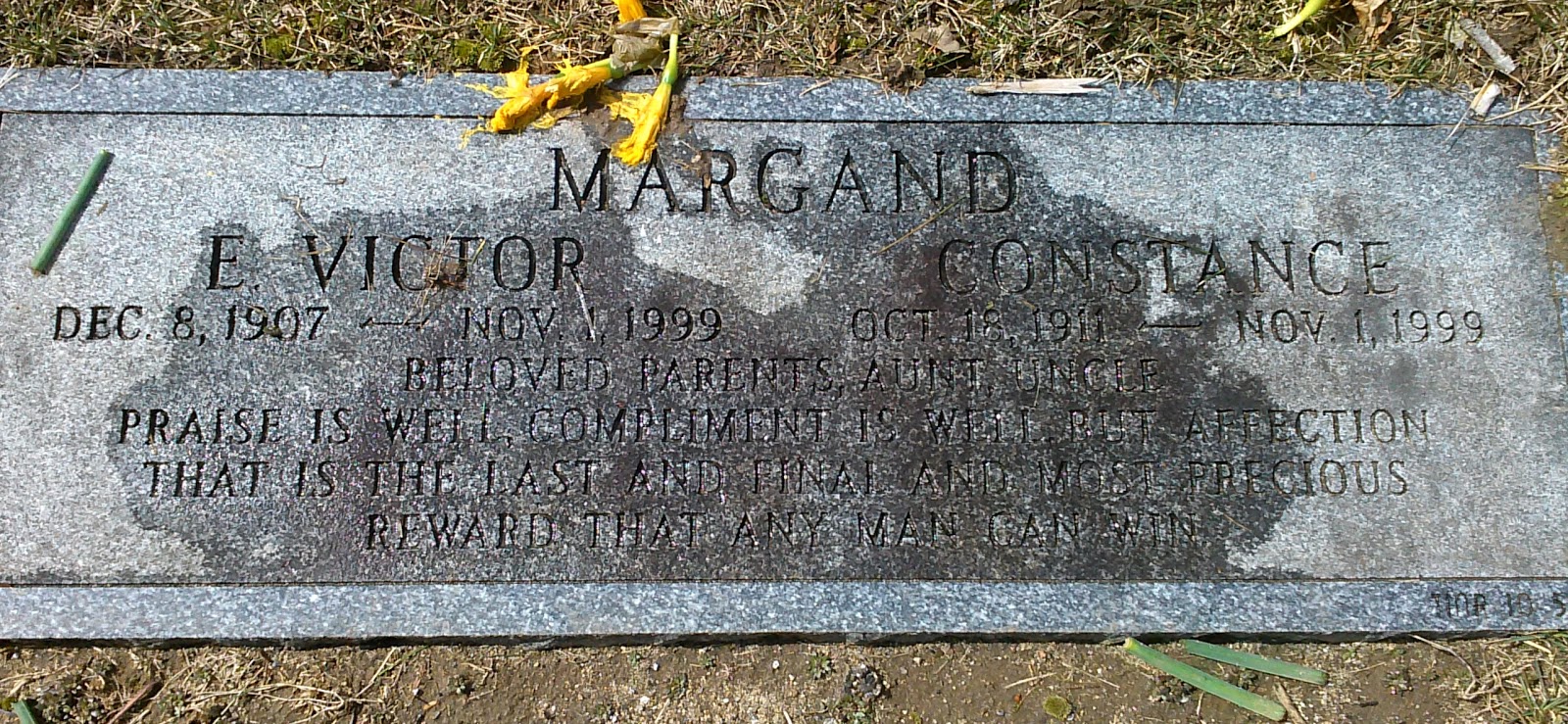
The closest thing to a family plot I have found is in Sharon Gardens, the Jewish section of the Kensico Cemetery in Valhalla, New York. Buried together there are both my paternal grandparents, my aunt, and my great-aunt and uncle.


My paternal grandfather

My paternal grandmother

Constance was my grandmother's sister. Her husband was Emanuel Victor Margand.
The story of their deaths is told in an earlier blog post:(https://whoweareandhowwegotthisway.blogspot.com/2013/10/constance-connie-kesner.html#more)

Jessica Jean Samuel Gray, my Dad's sister and the daughter of Edgar and Hortense is also buried in this plot. She passed away at the age of 78 on March 26, 2014. I really need to return to this cemetery and take a photo of her stone.


Saturday, February 21, 2015

52 Ancestors in 52 Weeks - #7 - "Grandmother's Love" - Estelle Byk Kesner

Estelle Byk Kesner


The theme for Week 7 was “Love.” Admittedly, I’m a tad bit behind. Blame that on the Genealogy Do-Over. Oh, and the IRS. I wanted to get our taxes filed in case the Anthem Hackers stole our identity. Looks like we’re safe!! (But this is serious business. Close friends of ours did, indeed, have their info stolen in the Anthem hacking. So I’m not just paranoid.)

My post this week is more about relationships than about genealogical data. A few years ago, my father, Alan Samuel, wrote a few short stories which I put together in a slim volume for family. One story, “Grandmother’s Love” describes the special relationship he had with his maternal grandmother, Estelle Byk Kesner. I've written about Estelle before but am taking this opportunity to further explore the family relationship.


Article in family scrapbook
created by Estelle Byk Kesner
 He writes,

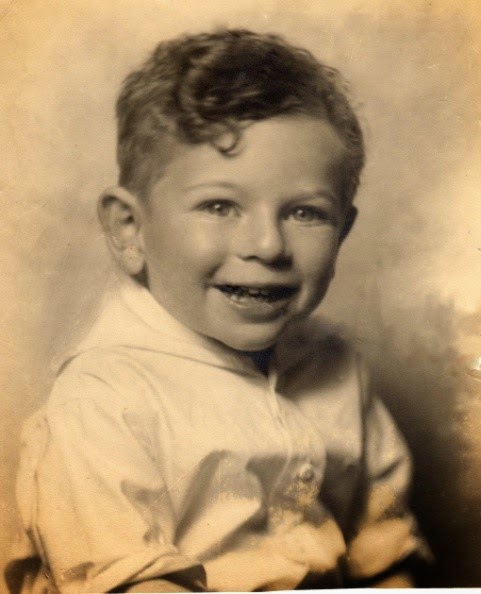
The little newspaper article in the family scrapbook shows that the story of me running away when I was three years old is true. I had an argument with my mother, and I stomped out of the house with the announcement “I’m going to see Nanny.” The notion of the toddler resentfully seeking support from his grandmother is unusual only that in going to see Nanny, I would have to travel from Jamaica, New York, to Brooklyn, a journey of about an hour on the Long Island Railroad.

I have some recollections of that trip, although it may be that what I remember are aspects of the story told to me in later years. I see myself sitting next to the window, the man to my right asking where my grandmother lived.

“In Brooklyn,” I said.

Alan - 3 years old - 1935


The vagueness of the address may be the reason for what happened next, according to the newspaper article. I was taken off the train at the next stop and my father was called from work to pick me up.

That’s the story. The events of the story. What lies behind it is as important, it seems to me, showing something about my relationship with my grandmother that has been clear to me much more in later life.  I obviously had no doubts about the reception I would receive from my grandmother. Complete acceptance and support. Here was a three-year-old who had someone he could count on without question. That is a relationship that I and my sister could count on as children, and that gave us a sense of solid acceptance not only as children then but as people all through life.[1]

Alan continued his story, detailing the special relationship. He was the first grandson and more importantly the first boy born in his grandmother’s family. (Estelle had two daughters, Constance and my grandmother, Hortense.) They spent summers at the Kesner farm and enjoyed many family events at his grandparents’ apartment house on Eastern Parkway in Brooklyn.

Alan was 16 years old when his beloved grandmother passed away on October 23, 1948.

His life was not without difficulties, many brought about by his own decisions.  He writes about that as well,

It has taken years for me to reconstruct the intimacy that [my sister] and I shared as children, a lesson in relationship that influences decisions I make in later life. I have seen similar circumstances affect the lives of some of my older children. All of this, however, goes back, I believe, to the relationship that my grandmother’s impact on our lives established. It is an impact I would liked to have had on my own grandchildren’s lives, and the failure of the possibility of doing so is one of my greatest regrets.[2]

I read that and immediately thought about the importance of my own grandmothers (Hortense Byk Kesner and Rose Spiegel Lichtenthal) in my life, including my step-father’s mother Vera Stella Falcone and our “adopted” grandmother, Alice Kilsheimer. Then I thought about the incredible influence my mother, Doris Lichtenthal Falcone, had on our children.

As I begin my own “grandmother journey” I hope I will kindle the same feeling – being loved unconditionally – in our grandchildren.

Note - I have searched numerous websites (especially Fulton History and the Brooklyn Newstand)
 trying to locate the source of the clipping shown above. If any reader would like to take on that challenge, I shall be eternally grateful. Week # 5 of the Genealogy Do-over had us working on citing sources and it's driving me crazy that I don't have this information. Maybe it's time for a train ride to NYC? 


[1] Samuel, Alan E. Stories from My Life. Comp. Deborah Holman. N.p.: n.p., 2009. Print. A collection of short stories published for private use.

[2] Ibid. 

Saturday, February 14, 2015

52 Ancestors in 52 Weeks - #6 - So Far Away - the Origins of the SAMUEL Surname

This week's 52 Ancestor Challenge was "So Far Away." I have chosen to research my last name as I believe it has Biblical origins. That's pretty far away! In addition, Moshe Jacob Samuel is the furthest ancestor I know of. His son, Lazarus was born in England in 1795.

Commercial websites such as The Internet Surname Database, House of Names, and Behind the Name provide some information, which may or may not be historically accurate. One can also purchase a family crest or a document detailing your family’s surname. I read the information on these sites regarding the ‘Samuel’ surname and they actually do come close to the information I have found in more the “academic” sources. These companies also sell a variety of products with your “family crest” emblazoned on them. I found two widely differently designs during my search. One is described on the Internet Surname Database: “The Coat of Arms is a red field, on a cross between, in the 1st and 4th quarters, a lion rampant, and in the 2nd and 3rd an eagle displayed silver, a rose of the field”[1] Another had a pair of squirrels facing each other. I am choosing to believe this to be our family crest– we are all a bit “squirrely”!!


There are a few different reasons that surnames came to be. One is that as communities got larger, surnames were used to distinguish between people with the same given name. Another is that last names became necessary when governments began taxing its citizens. I found this explanation, specific to Jewish last names (and the practice of patronymics) very helpful:

When talking about Jewish family names…it is important to keep one fact in mind: until the late 18th or early 19th century, very few Jews had such names at all. Every Jew...had a Jewish “last name,” but it was a personal one that was not passed on to children, since it was the name of one’s father that was used on ritual occasions. If your name was Boruch and your father’s name was Simcha, you were called up to the Torah as Boruch ben-Simcha; if your name was Rokhl and your father’s name was Dovid, you were mentioned in a ketubah or marriage contract as Rokhl bas-Dovid. But your son Aryeh was called to the Torah as Aryeh ben-Boruch, and your daughter Rivka was written in the ketubah as Rivka-bas-Eliahu (if that was the name of Rokhl’s husband). Such “last names” were one-generational.[2]
I've read in numerous sources that Jews generally didn't have surnames until forced to do so by various governments. I’m still not quite clear on that and need to do more research in this area.

The name was first used as a given name by the Semitic (Jewish) peoples and later spread to use by other ethnic groups. There was even a ship named Samuell that brought immigrants to America in the 17th century!

In a 2005 monograph, written by R.L. Samuell[3], I learned the first appearance of the proper (given) name Samuel was in the Old Testament book of the Bible, “The First Book of Samuel.” This Samuel is thought to have lived in the Eleventh century B.C. According to Biblical tradition, Samuel’s mother, Hannah was distraught because she couldn't have children. She prayed that, should she give birth to a healthy child she would dedicate him to God’s service and name him Samuel, which in Hebrew, means “Heard of God.” Her prayers were answered (“heard”) and she indeed named her son. Samuel. This son went on to become one of ancient Israel’s greatest leaders.

Eventually, the name began to be used as a surname as a result of the naming practice of patronymics. This is a naming practice where the child is named after the father, taking the father’s first name as a surname to distinguish him from others with same first name. For example, ‘John Samuel’ meaning ‘John, son of Samuel’. The variant ‘Samuelson’ is also evidence of this practice.

The earliest appearance of ‘Samuel’ as a surname seems to be in Great Britain and dates from the 12th century.  Adolfus Samuel may be the first known recording of the name in 1160, found in the Danelaw Rolls of Lincolnshire, England.[4] [5] It was often spelled ‘Samwel’ as shown in a 13th century census listing a ‘Matilda Samwel.’

“First found in Cornwall where they held a family seat from early times. The family name first appeared on the early census rolls taken by the early Kings of Britain to determine the rate of taxation of their Subjects.” [6]
Over the years many variations of the name appeared. Some may be to due changing pronunciations. For instance, pronouncing the ‘w’ as ‘u’, changing ‘Samwell’ to ‘Samuell.’ Others may be due to the standardization of spelling when the King James Version of the Bible was printed in 1611. Dropping the double letter may have been a way to save on type-setting costs. ‘Samuell’ then becomes ‘Samuel.’ Recorded variations of the surname include: Samwell, Samuel, Samuell, Samway, Samuels, and others. (I've written about the ‘Samuel’ vs. ‘Samuels’ issue in a previous post.)

From Ancestry.com, I learned that the name may be found in many cultures including: English, Scottish, Welsh, French, German, Dutch, Hungarian, Jewish and even South Indian[7]. A Greek variation is Samouelidis. I've met a woman with the last name of Samuelian. The Dictionary of American Family Names simply says, “English and Jewish: patronymic from Samuel.”[8]

Many people assume that everyone with the last name of ‘Samuel’ is Jewish. In my experience, I have met more African-Americans with that surname than Jews. This may be due to Anthony Samuell, Sr. (<1658-1731), who is credited as being the founder of the Samuel family in Virginia and southeastern United States. A probable great-grandson of Sir William Samwell of Northamptonshire (Great Britain), Anthony had nine known children. When he died in 1729, Anthony owned two plantations and 400 acres of other land. He was a planter and a slaveholder. It makes sense to me that many of those slaves would have taken on the Samuel last name. (R.L. Samuell)

There is another reason to dispute the association of ‘Samuel’ as being only a Jewish surname, especially for those with English ancestry. On July 18, 1290 the King of England, Edward I, ordered all Jews to leave his kingdom by November 1. The banishment persisted until the middle of the 17th century. During those 400 or so years there are many documented instances of people living their lives in England, with the surname ‘Samuel’. They were certainly not Jewish.

There is another, completely different theory about the origin of the ‘Samuel’ surname. Some believe the surname has a Viking origin. As explained by R.L. Samuell, the name could have been an “…Englishing of the Norse word ‘summeral’…” which means ‘summer Viking.’ Samuell, however, offers no specific proof of that theory other than stating that “…some have speculated…” on the theory.
I did find a blog post by an Edward Samuell[9] who supports the Viking theory.

“I have a difficult time with the surname Samuel coming from the Hebrew. I would transliterate Samuel from Hebrew as SHMUEL. The "sh" in Hebrew is an entirely different letter from the ‘s’… I do not know when in history the transliteration of Shmuel became Samuel, but I believe it occurred after Samuel, Samuell, or Samwell began to appear in English records like the 13th Century. I firmly believe for this reason that the origin of the surname Samuel in England has a viking origin as outlined in the R.L. Samuell article.”
In another forum, I found the surname ‘Samuel’ identified as a Sephardic (Jewish) name. This poster, Harry Stein[10], stated that the surname “…has been identified by the Holy Office of the Catholic Church of Spain as a Sephardic (Jewish) name." A visit to the website Sephardim.com provided a listing of 15 different sources that credit ‘Samuel’ as a Sephardic Jewish name.[11] Three of these references have been placed on my “to-do” list for further investigation as they related to the Samuel name in London where my family definitely came from.

So it seems the Samuel surname has a long and storied history.

Born a Samuel, with almost no relationship with my father, I was eager to change my name when I married into the Holman family. Deborah Joan Holman. Sounded okay to me. Somehow, when I filled out all those forms, I forgot. I've been Deborah Samuel Holman for almost 32 years now! As my daughter, Meghan says, “Everything happens for a reason.” Previous to my father’s passing in 2008, we repaired our relationship (for the most part anyway) and, even more important – it will be easier for future genealogists to trace our line!


[1] "Last Name: Samuel." The Internet Surname Database. N.p., 14 Feb. 2015. Web. 14 Feb. 2015. <http://www.surnamedb.com/Surname/samuel>
[2] Philologos. "How Did Jews Choose Their Last Names?" The Jewish Daily Forward. N.p., 9 July 2008. Web. 14 Feb. 2015. <http://forward.com/articles/13721/how-did-jews-choose-their-last-names-/>
[3] Samuell, R. L. "Monograph: Surname Samuel." N.p., 21 May 2005. Web. 6 Oct. 2013.
[4] "Samuels Family History | Find Genealogy Records & Family Crest." Samuels Family History | Find Genealogy Records & Family Crest. N.p., 2014. Web. 12 Feb. 2015. <http://www.archives.com/genealogy/family-history-samuels.html>
[5] "Last Name: Samuel." The Internet Surname Database. N.p., 14 Feb. 2015. Web. 14 Feb. 2015. <http://www.surnamedb.com/Surname/samuel>.
[6] "Samuel Surname History." Samuel Surname History. N.p., n.d. Web. 12 Feb. 2015. <https://www.houseofnames.com/Samuel-history?A=54323-292>.
[7] "Samuel Family History." Samuel Name Meaning & at Ancestry.com. N.p., 14 Feb. 2015. Web. 14 Feb. 2015. <http://www.ancestry.com/name-origin?surname=samuel>.
[8] Hanks, Patrick. Dictionary of American Family Names. Oxford, UK: Oxford UP, 2003. Print.
[9] Samuell, Edward. "Re: The Origin of the Surname Samuel ?" Re: The Origin of the Surname Samuel ? N.p., 23 Aug. 2004. Web. 26 Oct. 2013.
[10] Stein, Harry. "Samuel as a Sephardic Name." Samuel as a Sephardic Name. N.p., 25 Dec. 2001. Web. 26 Oct. 2013. <http://genforum.genealogy.com/samuel/messages/243.html>
[11] "Sephardic Names Search Engine." Sephardim.com. N.p., 14 Feb. 2015. Web. 14 Feb. 2015. <http://www.sephardim.com/namelist.shtml?

Friday, February 6, 2015

52 Ancestors in 52 Weeks - #5 My father, Alan Edouard Samuel

Again this week I have combined the 52 Ancestors in 52 Weeks challenge with Thomas MacEntee’s Genealogy Do-Over. Week 5 of the Do-Over had us focusing on building a research toolbox and on citing sources. My poor citing skill was one of the main reasons I decided to participate in the do-over. I had about 950 people in my “tree” some of whom I simply exported from other people’s trees. But, most crucial was the fact that I had many, many facts attached to people and I had no idea where the information came from. I also had many “holes” where I was missing information.

The theme for Week #5 of 52 Ancestors is “Plowing Through.” That is exactly how I have been feeling- "plowing through" research related to my father, adding it to my research log (Week #3 – Research Logs), carefully tracking my research attempts (Week #4 – Tracking Searches) and meticulously (hopefully correctly), citing the source of each fact before adding it to my genealogy software, RootsMagic.

I chose my father for a few reasons. One: The Do-Over had me start with myself. That was the focus of my last post. Then I moved to my father. Two: I have pretty much finishing gathering the vital stats for my father. 3: My father actually was a farmer. Truthfully, more of a farmer-wanna-be! So, here goes:

My father (center, wearing white pants) at the reunion he organized for his 75th birthday in 2007.
His sister, Jessica is to the left of him. 7 of his 9  kids were there.That's me in the turquoise shirt and weird print skirt.


Wednesday, January 28, 2015

52 Ancestors in 52 Weeks: #4 - "Closest to Your Birthday" - ME!!!

The theme this week is to write about an ancestor closest to your birthday. I am simultaneously participating in the Genealogy Do-Over. Week #2 of the Do-Over had us "interview" ourselves  and then write a biography. I decided to combine the two tasks and write about MYSELF.

WARNING: THIS IS A LONG POST. I won't be offended if you decide not to read it :-)

I could have written "just the facts, Ma'am" but - that's not my style. If I was going to write about myself, I wanted the reader to learn who I am, what I am about. After all, that's what I aspire to in my family history research. I want to "know" the person and a listing of vital statistics just doesn't cut it.

So - if you have the time - make yourself a cup of tea or coffee...pour yourself a beer or a glass of wine. Sit down and find out who I am.

Oh - and there aren't any pictures - sorry - I figured the post was long enough!!

Wednesday, January 14, 2015

Genealogy Do-Over: Step #2 - Where I'm at now

Topic: Setting Research Goals
As Week #2 closes, I have made some decisions:
1) I will think of the Do-Over weeks as steps instead of weeks.
2) I will recreate my tree, beginning with me
3) As I add each new person to the tree, I will :
  • gather, scan/photograph, record and file all documents I have for the individual
  • use the research log to track what I have done
  • enter information into RootsMagic, completing citations as noted on log
  • complete the "to-do" list as I go along - these will become research goals in the future
4)  As the Do-Over progresses, I will review recent work and incorporate the new skills/techniques.


Doing all the above for one individual, then moving to the next person, rather doing a global sort/reorganize seems to be a better match for me. I need to see the results from applying my newly learned (relearned) skills. 

Here's a Before and After of my digital files for my 3rd great-grandfather, Aaron Lazarus Samuel:

BEFORE

You'll notice a few things from this reorganization:
  1.  There are more files in the AFTER folder. That's because I went through ALL my digital folders and moved all relevant files to this new folder. 
  2. There's a shorter path to get to Aaron's folder.
  3. The FIRST file in the AFTER folder is the Genealogy Research Log for this person. I put an underscore _ as the first character to force it to the top (Learned this from a Do-Over post!)
  4. The old folder for Aaron (inside the HOLD Genealogy folder) is now colored red. I used Folder Maker to differentiate this finished folder from the others.(Learned about the Folder Maker program from the Do-Over.) Once my Do-Over is completed and I'm sure I don't need the old information, I'll delete the old folders.

Aaron Samuel Folder -AFTER


HOLD Genealogy folder - AFTER


Topic: Conducting Self Interview
RootsMagic has a pretty comprehensive list of facts you can associate with each person in the database. After entering myself into my new file, I completed as many of the facts as were applicable to my life. This went fairly quickly as I wasn't slowed down by the tedious completion of citations. The only citation I used was "Personal Knowledge!" On my to-do list, I listed the need to the acquire the documents related to my life 

I did enter the names of my parents, my direct paternal ancestors (the men only), my step-dad and my siblings as I knew I was going to focus on my 3rd Great-Grandfather, Aaron Lazarus Samuel and my step-dad, Alfonse Falcone for the 52 Ancestors in 52 Weeks Challenge.

Topic: Conducting Family Interviews
So much for watching the video of my Mom. We recently got a new flat-screen TV and apparently my husband hasn't hooked up the VCR! I am also going to resend the interview questions I originally sent out years ago. This time, I will expand the list of recipients to my cousins as well as others who may have relevant information to contribute. This will have to wait until I return from my vacation. 

Hopefully, I will be rested and reinvigorated, ready to resume the Do-Over!